
Everything You Need to Know About Buying a House with Cladding
Building or renovating near the coast offers incredible lifestyle benefits, but it also presents unique challenges for exterior materials. Coastal environments expose buildings to salt-laden air, high humidity, strong winds, and intense UV radiation. These conditions can accelerate corrosion, fading, and material deterioration if the wrong cladding system is selected.
Choosing the right weatherboards is therefore essential for ensuring long-term durability, low maintenance, and consistent appearance. Understanding how different materials perform in marine environments can help homeowners, architects, and builders make informed decisions.

Why Coastal Environments Are So Demanding on Cladding
Coastal regions are among the most aggressive environments for building materials. Airborne salt particles, constant moisture, and strong sea breezes significantly increase the rate of material degradation.
Saltwater exposure is particularly problematic because salt accelerates corrosion and material breakdown. In fact, saltwater can corrode materials up to five times faster than fresh water, which is why buildings near the ocean require specially selected materials and protective coatings.
The New Zealand building guidance also identifies several environmental factors that affect cladding durability in coastal locations:
- Salt spray carried by ocean winds
- High humidity and moisture retention
- Strong winds and wind-driven rain
- Increased UV exposure
These factors can cause premature deterioration, warping, fading, or corrosion in materials that are not designed to handle marine conditions.

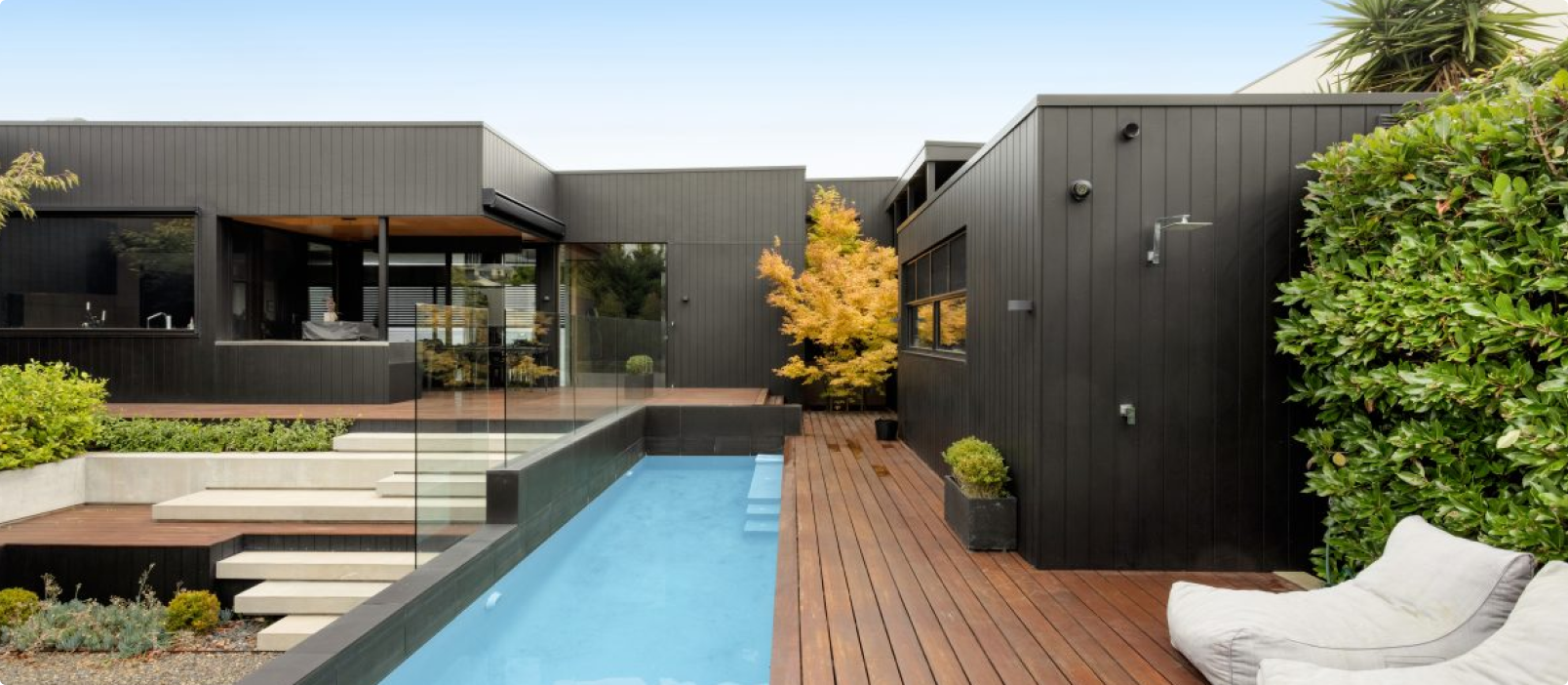
Products like Weathertex exemplify how material innovation can align with biophilic principles. Crafted from sustainably sourced Australian hardwoods, Weathertex cladding celebrates the inherent character of timber while offering durability suited to contemporary architecture. Its natural composition and textured finishes allow buildings to sit comfortably within their surroundings, softening the boundary between built form and landscape.
Incorporating timber cladding such as Weathertex does more than enhance visual appeal. The warmth of timber, the subtle variation in grain, and the way the Natural range weathers over time (if decided against staining the product) all contribute to a richer sensory experience. Facades become dynamic, responding to light and shadow throughout the day and evolving gently with the seasons. This ageing process reinforces a sense of time and place, an essential aspect of biophilic design.
When thoughtfully integrated, materials like Weathertex support a holistic approach to architecture, one where sustainability, performance and human wellbeing intersect. By choosing materials that reflect natural systems and processes, designers can create spaces that feel grounded, restorative and deeply connected to their environment.

Key Characteristics of Weatherboards for Coastal Areas
When selecting weatherboards for coastal environments, several performance characteristics are critical:
- Salt and Corrosion Resistance
In coastal areas, salt carried in sea air can settle on exterior surfaces and accelerate corrosion and material breakdown. For weatherboard cladding, it’s important to select products that resist salt exposure and do not rely on exposed metal components that may rust over time. Weatherboards made from corrosion-resistant or non-metallic materials generally perform better in marine environments and help maintain the durability and appearance of the façade.
- Moisture Resistance
Coastal environments often experience high humidity and wind-driven rain. Weatherboards must resist moisture absorption to prevent swelling, rot, or structural degradation.
- Dimensional Stability
Temperature fluctuations and moisture changes can cause some materials to expand, shrink, or warp. Stable weatherboards maintain their shape and structural integrity over time.
- Low Maintenance
Homes near the ocean often require more maintenance due to salt buildup. Materials that require less painting, sealing, or treatment offer long-term advantages.

Weatherboard Materials Suitable for Coastal Conditions
Engineered timber weatherboards are a suitable option for coastal environments, particularly when they are designed to withstand moisture, salt exposure, and harsh weather conditions. Products such as Weathertex weatherboards are manufactured from compressed hardwood timber fibres and wax, creating a dense, durable board designed for exterior wall cladding.
Because Weathertex timber boards contain no added silica, glues, or toxic binders, they offer a stable cladding solution while retaining the natural appearance of timber. Our high-density composition helps improve durability and dimensional stability when exposed to fluctuating temperatures, humidity, and coastal winds.
Weathertex weatherboards are also designed to perform in Australian conditions and have been widely used in residential construction. According to product testing and manufacturer specifications, Weathertex products are Branz appraised , demonstrating compliance with the National Construction Code for external wall cladding applications.
In coastal environments, engineered timber weatherboards can offer several advantages:
- Dense composition that helps resist moisture movement
- Stable performance across changing temperatures and humidity
- Long product warranties when installed and maintained correctly
When paired with appropriate coatings, installation methods, and corrosion-resistant fixings, engineered timber weatherboards such as Weathertex can provide a durable and visually appealing cladding solution for coastal homes.

Choosing the Right Weatherboards for Coastal Homes
Coastal homes require cladding materials that can withstand salt exposure, humidity, and strong weather conditions. Weathertex weatherboards offer strong performance in marine environments.
Selecting the right weatherboard comes down to balancing aesthetics, durability, maintenance requirements, and environmental conditions.
With the right materials and installation practices, weatherboard homes can perform beautifully even in the harsh conditions of Australia’s coastal regions.

Subscribe
Sign up for exclusive Weathertex tips and trends sent straight to your inbox